






Sign In
/
Register

For Advertising 077 1 43 77 07
More Recommendations
Best bank for student loans in Sri Lanka
Findit.lk



Unlocking Your Education: The Most Common Questions About Student Loans in Sri Lanka
Securing financing for higher education, whether local or overseas, is a crucial step for many Sri Lankan students. Navigating the world of educational loans—from grace periods to interest rates—can be complex.
To help you get started, we've compiled a list of the most frequently asked questions about the best student loan options available from Sri Lanka's leading banks and financing institutions.
Part 1: Eligibility and Loan Options
FAQ: Which banks in Sri Lanka offer the best educational loan schemes?
Many of Sri Lanka's major state and private commercial banks offer specialized educational loan products.
- Commercial Banks: Leading banks like Bank of Ceylon (BOC), People's Bank, Commercial Bank (ComBank), Hatton National Bank (HNB), Sampath Bank, DFCC Bank, and Union Bank all have dedicated education finance schemes. They cater to both local and foreign studies, often with flexible repayment plans.
- Government Scheme: The Interest-Free Student Loan Scheme (IFSLS), administered through the Ministry of Education and typically disbursed by state banks like BOC, is an excellent option for students who qualify to attend approved non-state higher education institutes (NSHEIs).
FAQ: Who is eligible to apply for an Educational Loan?
Eligibility often rests more on the income and employment of the borrower (or co-borrower) than the student.
- The Student's Role: The student must be accepted into a recognized course at a local or foreign university/institution, which often requires a minimum of three passes at the G.C.E. Advanced Level (A/L) examination.
- The Co-Borrower's Role (for non-employed students): The loan is typically taken out jointly with a parent, guardian, or spouse who acts as the primary income holder. Banks generally require the co-borrower to be in confirmed employment for a minimum period (e.g., 12 months) and have a minimum verifiable monthly net income, which can range from LKR 75,000 to LKR 150,000, depending on the bank and loan amount.
- Employed Applicants: If the student is already employed, they can often apply alone, provided they meet the bank's minimum salary and employment confirmation requirements.
FAQ: Can I get a student loan for both local and foreign education?
Yes, almost all major bank educational loan schemes cover both local and international courses.
- Local Focus: Loans cover course fees, registration, and examination fees.
- Foreign Focus: Loans for overseas education are often larger and can cover additional expenses such as visa costs, flight tickets, health insurance (like OSHC), and sometimes even a portion of living expenses.
- Recognition is Key: For both local and foreign courses, the bank will require the educational institute and course to be recognized by the University Grants Commission (UGC) of Sri Lanka or a similar relevant body.
Part 2: Loan Amounts, Repayment, and Interest
FAQ: What is the maximum loan amount I can get?
The maximum loan amount varies by bank and the purpose of the study.
- General Bank Loans: Most major banks offer a maximum loan amount of around LKR 10 Million, though some, like Union Bank and HNB (for foreign studies), may offer up to LKR 20 Million. The loan is usually capped at a certain percentage of the total course fee (e.g., 75% to 90%).
- IFSLS: Under the government's Interest-Free Student Loan Scheme, the maximum loan amount is determined by the field of study, typically ranging from LKR 600,000 to LKR 1.5 Million for the course fee, plus an optional stipend loan.
FAQ: What is a "Grace Period," and how long does it last?
The Grace Period is one of the most attractive features of an educational loan.
- Definition: It is the period during which the student is studying and is typically only required to pay the interest portion of the loan, or sometimes, no payments at all (a Capital Grace Period).
- Duration: Grace periods usually cover the full duration of the study period (e.g., 3 or 4 years) plus an additional six months to one year after graduation to allow the student time to secure employment. Maximum grace periods often extend up to 4 or 5 years.
FAQ: How long is the total repayment period for a student loan?
The repayment periods are structured to be lengthy and manageable.
- The Term: The maximum total repayment period (including the grace period) offered by most commercial banks is typically 7 to 8 years, though some banks may extend it up to 15 years for very large loans (especially for foreign education).
- IFSLS Repayment: Under the government scheme, the total loan period is 12 years (study + 1-year grace + repayment period), with the actual repayment starting after the grace period and lasting 7 to 8 years.
FAQ: Are the interest rates fixed or floating (variable)?
Both options are available, and the better choice depends on the economic outlook.
- Bank Rates: Commercial banks typically offer both fixed and floating (variable) interest rates for educational loans. Floating rates are adjusted based on the prevailing economic environment and Central Bank rates. Fixed rates offer predictability but are generally higher at the time of signing.
- IFSLS: The most significant feature of the government-backed scheme is that the loan is interest-free to the student, as the government bears the interest cost.
Part 3: Documentation and Security
FAQ: What documents are essential for applying for a student loan?
Preparation is key, as most required documents relate to your financial standing and the course details.
- Application: Duly completed loan application form.
- Course Details: Acceptance letter and detailed fee structure from the educational institution.
- Identification: Copy of National Identity Card (NIC)/Passport/Driving License.
- Income Proof (Co-Borrower/Applicant): Latest salary slips (3-6 months), employment confirmation letter from the employer (with an undertaking to remit the salary to the bank for some schemes), or valid income verification documents for self-employed individuals (e.g., business registration, bank statements).
FAQ: Do I need to provide security or collateral for the loan?
The requirement for collateral depends entirely on the loan amount and the bank's policy.
- Smaller Loans/Short Term: For smaller loan amounts (e.g., below LKR 500,000 to LKR 2.5 Million) or for shorter professional courses, the bank may only require personal guarantors (usually two).
- Larger Loans/Long Term: For loan facilities above a certain threshold (often LKR 5 Million or higher) or those with long grace periods, the bank will typically require tangible collateral, such as the mortgage of property.
some useful links:
Here are the best private universities in Sri Lanka
Or decides to choose a foreign university for their higher studies, student loans are really helpful to cover the expenses. If you are looking forward to completing your studies abroad, here are the best study abroad education consultants in Sri Lanka to continue your higher education overseas.
Don't forget to vote for the best bank for student loans in Sri Lanka! And if we are missing a great place, please suggest it to us!
January 8th 2022
Filter Companies with promotions
Top companies with promotions

Recommended Companies

Hatton National Bank PLC - HNB

FinanceHNB is a premier private sector commercial bank operating in Sri Lanka with more than 250 branches spread across the island. The bank has been internationally recognized by the Asian Banker Magazine as the “Best Retail Bank in Sri Lanka”. HNB is also placed among The Banker’s Top 1000 banks in the world. HNB is actively involved in Retail Banking, Corporate Banking, and SME Banking.

Commercial Bank of Ceylon PLC
Finance"Providing reliable, innovative, customer friendly financial services, utilising cutting edge technology and focusing continuously on productivity improvement whilst developing our staff and acquiring necessary expertise to expand locally and regionally" | Discover the best banks, credit cards promotions, loan, leasing rates, offers and discounts from the banks in Sri Lanka

National Savings Bank
FinanceNational Savings Bank is the premier Licensed Specialized Bank in Sri Lanka owned by the Govt. of Sri Lanka. It is the only bank whose deposits are fully guaranteed by the Govt. of Sri Lanka as expressed explicitly in the statute governing the Bank: | Discover the best banks, credit cards promotions, loan, leasing rates, offers and discounts from the banks in Sri Lanka |


Pan Asia Banking Corporation PLC
FinanceA Public Limited Liability Company incorporated in Sri Lanka on 6th March 1995 under the Companies Act No.17 of 1982 and re-registered under the Companies Act No.07 of 2007.A licensed commercial bank under the banking Act No.30 of 1988 and listed in the Colombo Stock Exchange. / Products - Consumer Banking Products , Retail Banking Products

Seylan Bank
FinanceSeylan bank has been in existence for more than 28 years with 166 branches , 193 automated teller machines and seven 365 day banking outlets, the bank continues to serve its customers with innovative banking solutions and service from the heart. | Discover the best banks, credit cards promotions, loan, leasing rates, offers and discounts from the banks in Sri Lanka |

Bank of Ceylon
FinanceVisit our website for more information on Current Accounts, Savings Accounts, Term Deposits, Term Loans, Home Loans, Personal Loans, Educational Loans, Leasing, E Banking, Credit Cards, Debit Cards, ‘’B app’’ Mobile application & Many More

HNB Finance
FinanceHNB Finance Limited was established in the year 2000 and is licensed by the Monetary Board of the Central Bank of Sri Lanka under the Finance Business Act No. 42 of 2011, and sustains the National Long-term Rating at ‘A (lka)’; as affirmed by Fitch Ratings. The company pioneered commercial based microfinance in Sri Lanka, charting a new course for the enterprising but inclusive small scale entrepreneurs of Sri Lanka, and is internationally acclaimed for its contribution to the microfinance industry.Maintaining an extensive island-wide presence through 48 branches, 21 service centers with the power of Hatton National Bank’s 650 ATM machines, HNB Finance has over the recent past expanded into new fields of business and now offers Small and Medium Enterprise (SME) Loans, Small Scale Enterprise (SSE) Loans in addition to Savings, Gold Loans, Fixed Deposit facilities and Leasing products to address the diverse segments of the Sri Lankan community and their evolving needs.HNB Finance has come to the forefront of non-banking financial institutes and continues to dominate due to the exceptional service offered to customers and trusted reliability showcased throughout their journey.

HSBC
FinanceHSBC is one of the world’s largest banking and financial services organisations. We serve more than 39 million customers through four global businesses: Retail Banking and Wealth Management, Commercial Banking, Global Banking and Markets, and Global Private Banking. Our network covers 66 countries and territories in Europe, Asia, the Middle East and Africa, North America and Latin America. Visit our website for more information about HSBC Credit Cards, Online Banking, HSBC premier, Interest Rates, Personal Internet Banking, Express Banking, Member-Get-Member, HSBC Advance, HSBC VISA Debit cards, Lifestyle Loan, Promotions, Lifestyle Wedding Loan, Lifestyle Travel Loan, Lifestyle Education Loan, Branch/ATM Locator, Insurance Offers, Digital Banking, Mobile Banking App & much more. Our branches are in Wattala, Nugegoda, Colombo 01, Union Place, Wellawatte, Negombo, Moratuwa, Kandy, Bambalapitiya, Pelawatte, Jaffna, Cinnamon Gardens, Galle etc

Union Bank of Colombo PLC
FinanceEst. in 1995 Union Bank is a strong player in the Banking sector in Sri Lanka with over 29 years of service to the Nation. With a solid financial standing Union Bank offers financial solutions to the Retail, SME and Corporate segments.

Nations Trust Bank
Finance| Discover the best banks, credit cards promotions, loan, leasing rates, offers and discounts from the banks in Sri Lanka | Visit our website for - Private Banking, Fixed Deposits, Call Deposits, Investment Products, Nations Personal Loan, Vehicle Finance, Nations Professional Lease , Nations Car Loans ,Nations My Bike Leasing, Nations Home Loan, Foreign Exchange Products & more

Amana Bank
FinanceAmana Bank is the first and only Licensed Commercial Bank supervised by the Central Bank of Sri Lanka to operate fully according to non-interest based people friendly banking model

Siyapatha Finance PLC
FinanceA Finance Company which offers financial solutions of Leasing, Hire Purchase, Factoring, Gold Loan and Fixed Deposits. Company Registration No. PB917PQ
SLIIT
EducationCelebrating 25 years, SLIIT serves 25,000 students with a 98% employment rate and over 40,000 alumni. It offers diverse programs in Computing, Engineering, Business, Architecture, Design, Psychology, Nursing, Law, Financial Mathematics, Education and more



Sampath Bank
FinanceFind out about Current Accounts, Credit card offers,Savings, Term Deposit Accounts, Foreign Currency Accounts, Loans, Leasing, Accounts for Professionals, Pawning, Gift Vouchers, Cards,Foreign remittances, Relationship Banking, Electronic Banking,Safety Lockers, Clubs and Societies Account, Entrepreneur Development, Electronic Banking, Corporate Banking, Investments & more

NDB Investment Bank Limited
FinanceNDBIB has been recognized by Euromoney as Sri Lanka’s No.1 investment bank for 14 consecutive years, and we strive each day to improve and maintain this standard that we have achieved.

LB Finance PLC
Finance
SDB Bank
FinanceA unique bank committed to uplifting the standards of living for low income Sri Lankan families with its range of micro finance activities.

Standard Chartered Sri Lanka
FinanceWelcome to the official page of Standard Chartered Sri Lanka, where you’ll find our news, offers and much more.

DFCC Bank
FinanceDFCC Bank PLC, Sri Lanka’s premier Development Bank is now a fully-fledged Commercial Bank that offers an array of seamless banking solutions. | Discover the best banks, credit cards promotions, loan, leasing rates, offers and discounts from the banks in Sri Lanka |
#21
Not on the list?
Add your favorite item

Please only add items that are relevant to this list topic
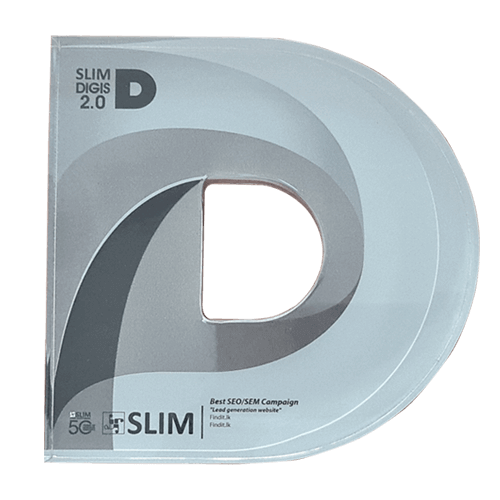
An Award-winning Website
for the Best SEO campaign of 2020,
SLIM DIGIS 2.0 Awards
Follow Us On Social Media


